My calendar has a standing monthly date with Ivy—my IV bag full of antibodies.
It’s not the kind of appointment most people schedule, but it’s become part of life with primary immunodeficiency.
For most of my life, being sick was just…normal. Sinus infections, allergies, and endless rounds of antibiotics were part of my routine. If I cleaned the house and ended up down for a few days afterward, I blamed my allergies. My doctor kept refills ready, we switched medications when one stopped working, and life kept moving.
Eventually it became clear something bigger was going on.
After years of infections that refused to stay gone, I was diagnosed with primary immunodeficiency—which means my immune system doesn’t have the antibodies it needs to fight illness the way it should.
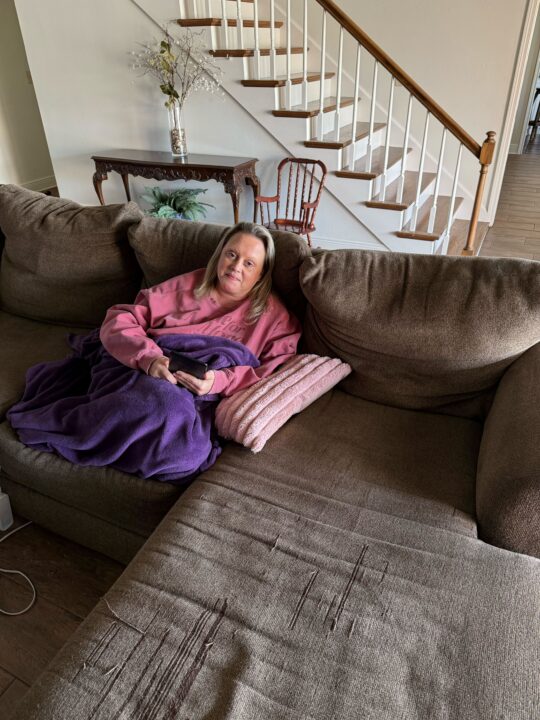
Now I receive IVIG infusions once a month, and I try to schedule them on Fridays whenever possible. By noon I’m usually heading home, grabbing a snack, setting an alarm, and taking a long nap. The first few treatments wiped me out, but now the routine is manageable. Most of the time the only evidence left behind is a bruise on my arm and a strong desire to stay under my blanket for the rest of the afternoon.
What makes conditions like this tricky is that most of the time no one can see it.
I can walk into the office looking completely fine—hair done, makeup on, coffee in hand. On the outside, nothing seems unusual.
But fatigue is constant. Not the kind that disappears after a good night’s sleep—the kind that settles into your bones and stays there.
And motherhood doesn’t slow down for any of it.
My kids have grown up watching me manage this, even if they don’t fully understand it yet. They know infusion Fridays means Mom might be on the couch with a book and a blanket when they get home from school. Those days they’re surprisingly sweet—a little quieter and a little more helpful. We usually order dinner or go somewhere easy because cooking a big meal isn’t high on my priority list after treatment… especially when that meal involves feeding three teenagers, two of whom are growing boys who seem to be hungry every 15 minutes.
Living with an invisible illness has taught our family patience and flexibility. We plan around treatments, pace ourselves when needed, and adjust when my body needs a break.
Because once a month I’ll show up for my standing date with Ivy—then come home, take a nap, and jump right back into the real marathon of the day: keeping up with three teenagers who treat the kitchen like it’s open 24 hours a day and a husband whose brain doesn’t always know when it’s time to shut down for the night.
— Amy Foreman