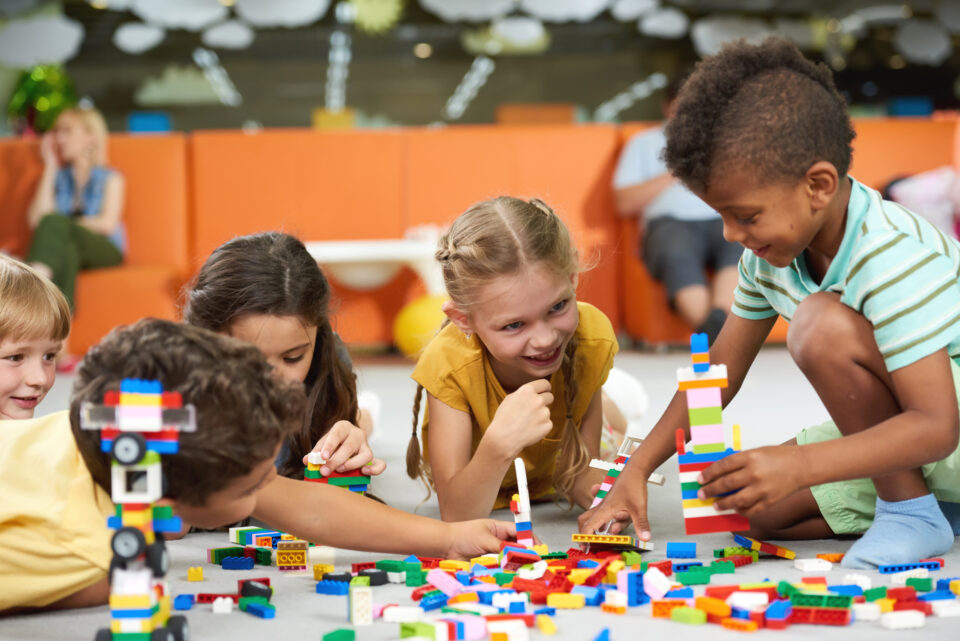
Choosing a preschool is one of the first big educational decisions families make, and it can come with just as many questions as excitemnt. From teaching philosophies to classroom routines and social-emotional growth, parents want to know what really happens once the school day begins. To help, Colorado Parent Magazine sat down with local preschool leaders from Boulder Country Day School, Little Sunshine Playhouse, and Children’s Garden Montessori to ask the questions families care most about.
Boulder Country Day School
What does a typical day look like for a child in your program?
Boulder Country Day successfully balances social-emotional and academic learning. Our schedules are routine and predictable, rotating between active and quiet learning blocks. We encourage exploration and inquisitiveness, and our teachers intentionally plan learning experiences for math, science, art, literature, and the development of gross and fine motor skills. We also integrate a monthly DEIB (Diversity, Equity, Inclusion, and Belonging) curriculum to support growth in empathy and global awareness.
BCD preschoolers benefit from daily “specials,” including art, library, movement, innovation lab, world language, and music. Additionally, children enjoy scheduled “buddy time” with teachers to foster genuine, authentic relationships and a positive classroom culture. While the preschool resides in a separate building with a private gated playground, we provide several opportunities for older students from our Elementary and Middle schools to mentor our preschoolers. This includes our “Bulldog Families” program—a group of students from every grade level who remain together throughout their entire time at BCD to complete community service projects and school spirit activities.
How would you describe your educational philosophy for preschool-age children?
Research shows that early learning is most successful when presented through play. BCD’s Preschool is an intentional, play-based program that utilizes a gentle, nurturing, and engaging environment to facilitate growth. We use positive discipline to help children develop the skills they need to succeed both in and out of the classroom.
Preschoolers at BCD learn to problem-solve both individually and collaboratively. We encourage independence while offering guidance whenever needed. Above all, our goal is for children to love school and create a lifelong positive association with learning. Our philosophy is guided by our core BCD values: Take Care of Ourselves and Others, Explore Many Paths, Meet the Challenge, Create Inclusion and Belonging, and Be a Part of Something Bigger.
What should parents know about your teachers and classroom environment?
Our teaching team is defined not only by high-level education and experience but by a deep passion for early childhood development. BCD teachers build genuine relationships with both students and their families; parents are always welcome in our classrooms.
Our environment is well-equipped and designed to optimize learning while providing a safe, gentle space for children to grow. We carefully curate each classroom so the physical space becomes an active part of the learning experience. Additionally, BCD prioritizes campus safety and has implemented several layers of security measures to protect our community.
How do teachers partner with parents throughout the years?
Our teachers partner with parents with an emphasis on communication and community building. At the start of each year, we schedule “Hopes and Dreams” conferences, where parents share their child’s specific goals and challenges. These meetings also allow us to learn about each family’s culture, which we use to honor unique customs and traditions within our curriculum.
Throughout the year, BCD holds formal parent-teacher conferences, with additional meetings available upon request. Because of our tight-knit environment, teachers from Preschool through 8th grade develop lasting bonds with families that continue throughout their tenure at BCD and beyond.
How do you support children with different learning styles or developmental needs?
BCD is fortunate to have a dedicated Learning Center. Students’ social, emotional, and academic goals are supported by a team that includes both classroom teachers and Learning Center professionals.
Every child is observed and assessed through playful scenarios. These insights allow teachers to create experiences that support children at all developmental levels. In the event that a teacher identifies a specific learning need, our Learning Center specialists perform additional observations to determine the best support strategies to ensure the child’s success. Information regarding a child’s strengths and tools for success follows them throughout their entire career at BCD.
How do you help children prepare for the transition to kindergarten?
BCD preschoolers are well-prepared for Kindergarten. Academically, they typically exceed beginning levels in reading, numeracy, and writing. More importantly, they learn how to self-advocate, problem-solve, care for their own needs, and balance their own rights with the needs of others.
If you could describe your school in three words, what would they be?
Joyful, Welcoming, Exceptional.
What are 1-3 events you have every year that families and children look forward to?
- Fall Festival
- Celebration of Cultures
- Preschool Olympics
- Preschool Sweethearts Dance
Little Sunshine Playhouse
What does a typical day look like for a child in your program?
The daily routines in our classrooms vary based on age and developmental needs. In our infant and young toddler classrooms, we spend a significant amount of time on the floor, singing songs, reading books, and exploring new materials based on daily lesson plans, all while engaging in essential caregiving routines, such as diaper changes, bottle feedings, mealtimes, and naptimes. We also love taking our little ones outside for fresh air and outdoor exploration.
As children grow older, you’ll notice greater structure in the classroom, including story time, morning gatherings, small-group activities, daily lessons, and artistic experiences designed to nurture the whole child. We provide breakfast, lunch, and an afternoon snack. Enjoy outdoor exploration twice a day, and each of our locations offers a variety of extracurricular activities, such as yoga, soccer, music, and creative storytelling.
What should parents know about your teachers and classroom environment?
All of our classrooms are led by qualified early childhood teachers, supported by a dedicated team of assistant teachers and classroom aides. We have a unique role called Head Teacher, who serves as a mentor in the classroom, providing ongoing support to our teaching team. Our teachers undergo extensive background checks, comprehensive onboarding, and continuous professional development throughout their careers. We celebrate their growth and encourage them to gain additional credentials.
Inspired by the Reggio Emilia approach, we take special care to thoughtfully design engaging, hands-on environments that cater to the needs of young learners. We often refer to our classroom spaces as our “third teacher,” understanding that children form relationships with their environment as they explore the various learning centers set up by our educators. You will find spaces for exploration, building, and creativity, equipped with age-appropriate furnishings and materials tailored to each child’s developmental stage.
How do teachers partner with parents throughout the years?
As a Reggio-inspired school, community engagement is highly valued. We love connecting with parents during drop-off and pick-up times and maintain an open-door policy for ongoing meetings and discussions about their child’s growth and development. Our school uses an app-based program called LuvNotes to provide real-time updates and photos, keeping parents informed about their child’s day.
We invite parents to join us monthly for “Family First Fridays,” providing families with the opportunity to explore the learning taking place in our school and engage hands-on with their children in our classrooms. Additionally, we host parent conferences twice a year, once in the fall and once in the spring, to foster deeper conversations about child development. We also welcome family members into the classroom when they have special skills or knowledge to share with the children. For example, many family members have recently showcased their musical talents during our music and movement unit of study.
How do you support children with different learning styles or developmental needs?
At Little Sunshine PlayhouseⓇ, we utilize our own curriculum framework called “Creatively ShineⓇ.” This framework emphasizes whole-child growth and development, accommodating various learning styles and developmental needs within each classroom. Our educators collaboratively construct invitations and provocations daily based on children’s interests and needs. We also complete developmental checklists and curate individual child portfolios. These resources guide learning and provide a comprehensive view of each child’s strengths and areas needing additional focus to support their ongoing growth and development.
How do you help children prepare for the transition to kindergarten?
We have several systems in place to effectively prepare children for the transition to kindergarten. Our curriculum framework emphasizes whole-child growth and development, establishing a well-rounded daily routine that supports all aspects of children’s overall development. We focus on scaffolding learning throughout the preschool and pre-K years, covering essential kindergarten readiness skills to ensure children are well-equipped for their next steps.
Additionally, we prioritize social-emotional learning, guiding children as they navigate important social interactions with peers and adults. This foundation helps them build confidence and fosters positive relationships. Children also engage in both small and large group activities that promote deeper language and communication skills, encouraging them to express themselves and collaborate with others.
Our daily classroom routines are thoughtfully designed to develop self-help skills and promote autonomy, preparing children as they embark on exciting new adventures in kindergarten. With our supportive and enriching environment, we aim to empower each child, ensuring they feel confident and ready for this important milestone in their educational journey.
Are there 1-3 events you have every year that families and children look forward to?
We love coming together as a school community to celebrate! A few of our favorite events include the annual Back-to-School Bash, the Winter/Holiday performances, and each of our schools’ birthdays. We also invite families throughout the year to highlight learning through art shows, classroom performances, and meaningful small gatherings at each location.
Children’s Garden Montessori
What does a typical day look like for a child in your program?
Children’s Garden serves as a school and community of young children more so than a childcare program and our schedule reflects this. Depending on age, our Pre-School age children attend for 3 hours to 6 ½ hours a day. After greetings and a short circle time, child’s day at school is a flow of individualized activities, small and large group projects, using the indoor and outdoor spaces as learning and playing environments, and where the children have a good amount of autonomy in selecting their activities. Our schedules reflect a child’s need for structure and unstructured time, connections, rest and down time.
How would you describe your educational philosophy for preschool-age children?
Our school philosophy incorporates a unique blend of Montessori and Reggio philosophy. We support children in being independent by supporting them in caring for themselves and the world around them, cultivating a sense of curiosity and competence, along with helping them in learning how to advocate in order to have their needs met with peers and adults.
We see early childhood education as a living, relational ecology rather than merely an applied methodology. We trust children as whole beings, capable of meaning-making, inquiry and deep concentration. From Montessori, we carry a reverence for the prepared environment, purposeful work, and the child’s inner life; from Reggio Emilia, a devotion to relationship, material as language, and learning as something co-constructed and alive. Independence, in our view, grows out of belonging, not separation. Our role as teachers and administrators is to listen closely, prepare thoughtful conditions, and stay curious alongside children, allowing conflict, uncertainty, and beauty to be part of the learning process rather than something to be smoothed away.
What should parents know about your teachers and classroom environment?
Our teachers are highly educated, experienced, and passionate about Early Childhood Education. They embrace a culture of lifelong learning and seek out opportunities to extend their understanding of brain (human growth and) development and ways to extend learning for young children beyond traditional curriculum.
The classroom environment is viewed as a teacher for the child. It is arranged to provoke curiosity and to encourage exploration and understanding, providing concrete materials that showcase a universe of educational and cultural concepts. Knowing, as Montessori advocated, that “the hand is an instrument of the mind” and what the hand does the mind remembers. Experience builds understanding. Thus we are ensuring that the environment is tactile with hands-on, sensory engaging, natural materials and activities, aimed to provoke inquiry, concentration, collaboration, curiosity and creativity.
How do teachers partner with parents throughout the years?
Before a child ever walks into the classroom, the teachers work to partner with the parents to understand who that child is and how to support their development. Starting with a Home Visit, we mindfully set up opportunities for parents and teachers to come together to form a strong relationship that allows for a meeting of the minds around supporting young learners on their first educational journey.
We recognize parents as the child’s first teachers, and approach education as a collaboration. Our ongoing documentation and community programs serve to include parents and caregivers in the daily life of our school and to invite families into an ongoing and aware dialog throughout a child’s time at our school.
How do you support children with different learning styles or developmental needs?
We support different learning styles and developmental needs by designing learning environments that offer various points of entry and by remaining in close relationship with each child. Instead of sorting children by strengths or deficits, we trust that children reveal what they need through their lived experience, play, questions, and resistance. We provide open-ended materials, varied rhythms, and flexible pathways so children can approach learning through movement, creative and spoken language, construction, solitude, collaboration, repetition, and/or imagination. We observe, document, and adjust the environment. By honoring autonomy alongside connection we create conditions where differences are welcomed as essential to the life of the classroom.
How do you help children prepare for the transition to kindergarten?
A Montessori statement says it best, “We serve the future by protecting the present. The more fully the needs of one period are met, the greater will be the success of the next.” Cultivating an intrinsic love of learning and curiosity, an “I can” attitude, resilience, creativity, concentration; laying a broad and strong foundation across the developmental and educational domains, with increasingly complex tasks, projects and collaborations – all building blocks for entry into the next learning community.
If you could describe your school in three words, what would they be?
Cultivating Community, Curiosity, Connections.
What are 1-3 events you have every year that families and children look forward to?
- Annual Cultural Festival of experiences related to cultural and seasonal traditions across the world;
- Spring Art Show and Exhibit celebrating the creative and imaginative research and work of the children through the school year.
- End of school year Bunny Run and Picnic