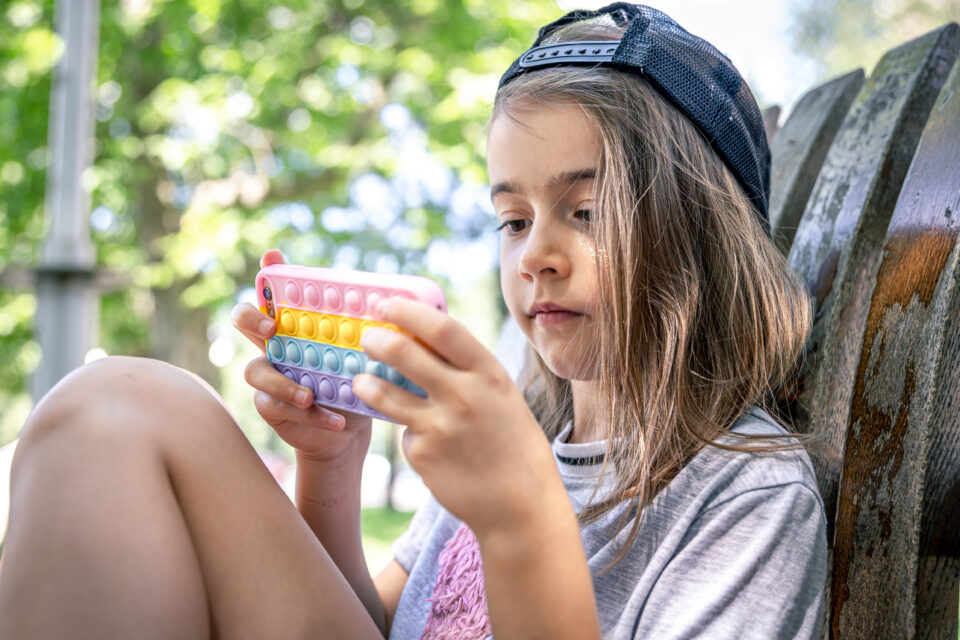
In 2017, American teachers had a new classroom enemy: the fidget spinner. Almost every homeroom had an abundance of students with pockets full of fidget spinners galore. Kids clacked them on their desks, flung them at their peers, traded them at lunch, and cried when they lost their favorite fidget. Some schools even went on to place bans on the popular sensory toy. But eventually, the cool factor of the fidget spinner faded, and the youth moved onto the next big craze.
Did fidget spinners get an unfair, bad rap? Probably so. But consider this: These sensory tools gained popularity as toys because when they were used as intended, they worked!
Merriam-Webster defines the noun of fidget as, “something (such as a toy) that is designed to be held and manipulated (as to decrease stress and anxiety).” It may be suggested, however, that fidgets are so much more than just a toy, and they are truly so much more than just a fad. Let’s dig into the world of fidgets, how they work, who they benefit, and also consider reintroducing them to the classroom (and boardroom, and beyond).
A Fidget for Everyone
Believe it or not, reader, you have probably fidgeted in your lifetime. Whether twirling your hair, clicking a pen, or bouncing a knee, fidgeting helps humans manage stressful moments and can even increase focus. There are SO many types of fidget tools on the market, and available to 3D print, in 2026.
Deep Pressure Fidgets: weighted blankets, stuffed animals, and shoulder vests, compression clothing, and more.
Gross Motor Fidgets: balance boards, trampolines, swings, rocking stools, exercise balls, and more.
Oral Fidgets: chewerly (chewable jewelry), gum, sour candy, z-vibes, and more.
Repetitive Motion Fidgets: chain fidgets, click rollers, fidget spinners, fidget cubes, spinner ringers, and more.
Resistance Fidgets: firm putties, hand grips strengtheners, resistance bands, and more.
Tactile Fidgets: stress balls, putties and doughs, tangles, pop-its, velcro strips, sensory rings, worry stones, and more.
Visual Fidgets: bubblers, glitter jars, sand jars, lava lamps, and more.
How Fidgets Work
While it may appear that fidgets just keep the user occupied, there is much more than meets the eye in terms of the purpose and the benefits of these sensory tools. Fidgets actually work in multiple ways, with a variety of benefits.
First, fidgets can help with sensory processing. Many life experiences can be overwhelming with unpredictable or abundant sights, sounds, smells, feelings, and tastes, too. By providing predictable sensory stimulation and input through touch, pressure and movement, fidget users can regulate and balance their nervous system.
Second, they can support self-regulation. Small, repetitive movements can provide an individual with a sense of calm and possibly reduce their stress and anxiety. Allowing the body to find a rhythm allows a release of nervous energy.
Third, fidgets can help build sustained attention. Through releasing a bit of energy, fidgeting can improve focus. Allowing the body to move in a concentrated and rhythmic way can give the brain the focus needed to attend a task in a more meaningful way.
Regulated. Calm. Focused. The abundant and deep benefits of fidgets definitely should urge society to reclassify them from mere toys to true tools.
Who Benefits from Fidgets
An individual does not require a diagnosis of any sort to enjoy a fidget’s benefits. Anyone looking to hone their focus or enjoy an exhale of relief from the world’s stressors can pick up a fidget and give it a whirl. Feel itchy with stress? Take a moment and try bouncing a leg, flexing fingers to a beat, chewing some sour-flavored gum, or squishing a stress ball.
With all of that said, individuals with anxiety and neurodivergent individuals with ADHD, autism, or sensory processing disorders may benefit from adding fidgets to their arsenal of everyday tools used to navigate life. The benefits are the same. The main difference between neurotypical vs. neurodivergent use of fidgets would be that the level of need would affect the frequency of use.
Re-Introducing Fidgets to the Classroom (and Boardroom, and Beyond!)
Kids will be kids! And children playing with fidgets in an unintentional, unruly way may have teachers considering rules regarding fidgeting. However, when used intentionally and with clear expectations, they can be a helpful tool rather than a distraction. A classroom with students that are regulated, calm and focused is also a classroom that is set up for success and lots of learning! So whether a child is using a fidget at home or at school or whether an adult is embarking on a fidget finding journey of their own, it is clear: Fidgets are so much more than just a fad!