Why Dance Classes Matter: The Real Benefits Beyond Recitals
As the school year fills up with carpools, homework, and the search for activities that truly feel worthwhile, many families find themselves asking the same question: What will help my child grow—not just stay busy? One answer that continues to stand the test of time is dance. Dance classes offer children physical fitness, cognitive development, emotional resilience, and social belonging in a single, joyful experience.
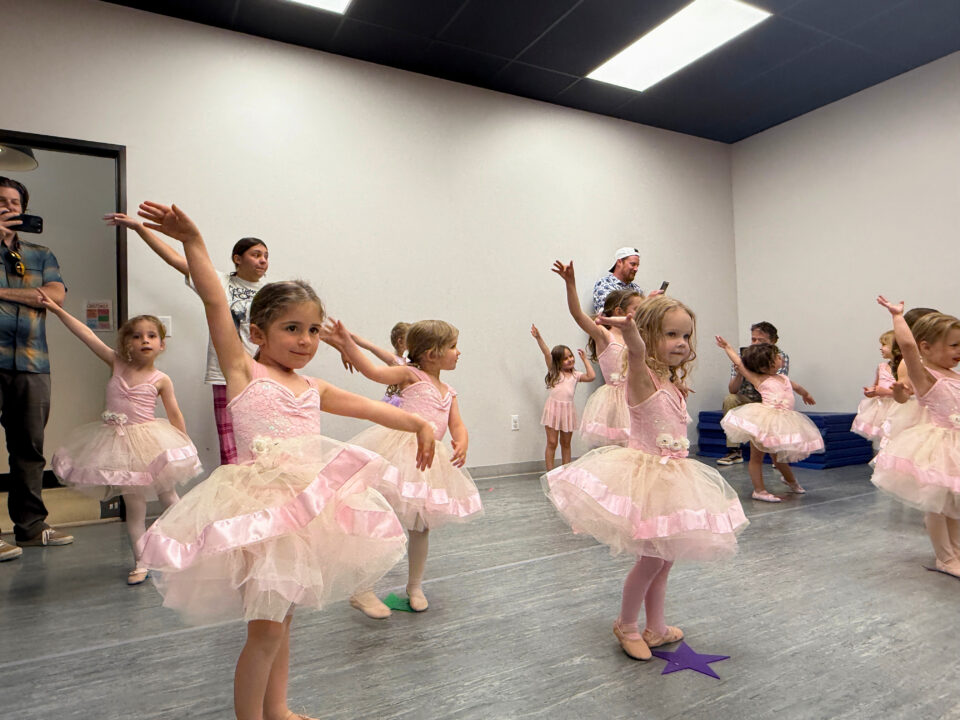
Dance class is often seen from the outside as recitals, costumes, and high-energy music. But inside the studio, something much deeper is happening. Week after week, children are building strength, confidence, friendships, and a sense of who they are becoming.
Dance Styles for Every Child: Finding Their Passion
One of the first things families notice is that dance offers options for all interests and goals. Not every child wants the same experience, and that’s the beauty of dance discovery.
Popular dance styles include:
- Ballet: The foundation for most young dancers, ballet’s focus on technique and precision helps build strength, posture, and an understanding of the language that dancers use across all styles. It’s where many dancers find their footing—literally and figuratively.
- Tap: The percussive joy of tap combines footwork with music-making. Students become both dancer and musician, creating rhythms with their feet while building coordination and confidence in a style that’s playful and purposeful.
- Jazz: Blending rhythm, improvisation, and technique, jazz is where structure meets style. It gives dancers the freedom to add personality and flair while building solid technical skills.
- Hip Hop: For kids who want to move to modern music and express themselves with energy and attitude, hip hop brings contemporary rhythm and creativity. It’s freestyle meets fun, where personality shines through every move.
- Acrobatics: For kids drawn to challenge and athleticism, acrobatics develops strength, courage, and the kind of dynamic movement that feels powerful and transformative. It’s dance that pushes physical boundaries.
- Musical Theatre: For the child who loves to perform, musical theatre weaves together dance, acting, and song into one complete experience.
- Contemporary: Where storytelling meets movement, contemporary dance gives kids freedom to express emotions and ideas through fluid, organic motion. It’s less about perfection and more about authenticity and artistic voice.
Some students are drawn to the structure and elegance of ballet. Others can’t wait to move to the rhythm in hip hop or tap. Some love the storytelling of contemporary or musical theatre, while others thrive in the athleticism of acrobatics or the classic style of jazz. With so many options, kids are free to explore until they find the style that ignites their passion.
At Production Company Dance Centre, our diverse program offerings mean every child can discover the movement style that speaks to them—whether that’s their first class or part of their long-term training journey.
Physical Benefits of Dance for Kids
While students are having fun, their bodies are doing important work. Dance classes build essential physical skills:
- Coordination: The ability to use multiple body parts in harmony
- Balance: Core strength and spatial awareness
- Flexibility: Range of motion and injury prevention
- Stamina: Cardiovascular health and muscular endurance
- Body Awareness (Proprioception): The sense of where your body is in space—a skill that carries into sports, skiing, and simply moving through the world with confidence
- Healthy Bones & Muscles: Weight-bearing movement strengthens skeletal and muscular systems during critical developmental years
These physical benefits support strong muscles, healthy bones, and the kind of body awareness that carries into every other activity—from sports to skiing to simply moving through the world with confidence.
Cognitive & Mental Benefits: How Dance Supports Brain Development
The most meaningful growth often isn’t physical.
Inside a dance class, students are constantly strengthening their minds. They learn how to listen, retain information, and apply corrections. They practice sequencing and memory as they learn choreography.
Research in arts education has shown that structured movement supports:
- Focus & Attention: The ability to concentrate on instruction and refine technique
- Problem-Solving: Working through movement challenges and finding creative solutions
- Memory & Retention: Learning choreography strengthens both short-term and long-term memory, with benefits that show up in the classroom
- Executive Function: Planning, organizing, and executing multi-step movement sequences
These skills show up in the classroom and in life as much as they do in the studio.
Emotional & Social Development: Building Confidence Through Dance
Have you ever watched a child walk into a new activity unsure of themselves? Shoulders slightly forward, voice a little quieter than usual? Then, a few months later, you see that they are standing taller, volunteering to go first, and cheering on a friend. That transformation is the heart of dance.
Dance classes are known to develop emotional skills too, which can be, but are not limited to:
- Resilience: Learning that mistakes are part of the learning process
- Self-Confidence: Experiencing improvement and celebrating personal progress
- Emotional Expression: Using movement to communicate feelings and creativity
- Patience & Persistence: Working toward goals through consistent effort
- Self-Acceptance: Finding a safe space to be authentic and expressive
Students learn that it’s okay not to get something right the first time. They learn patience, resilience, and how to work toward a goal. They experience the pride that comes from improvement, not perfection. For many children, dance becomes a place where they feel safe to be themselves—expressive, creative, and supported.
The Power of Group Dance Classes: Building Community & Life Skills
What is it about the group class model that makes such a difference?
Group classes teach life skills in real time. Dancers learn how to share space, how to move together, how to communicate without words. They encourage one another. They celebrate each other’s progress. Over time, that weekly class becomes a small community where friendships are formed and a sense of belonging takes root.
At Production Company Dance Centre, we believe that magic happens in the room together. Our group classes aren’t just about learning choreography—they’re about creating a supportive community where every student feels valued, known by name, and invested in their growth.
Performance & Courage: What Onstage Experiences Teach Children
For parents, those moments onstage often become the most visible markers of growth. A first performance—whether in a holiday show, a recital, or a small in-studio sharing—requires courage. Stepping into the spotlight teaches children that they can do hard things, that preparation leads to confidence, and that their voice and presence matter.
Growing as a Dancer
Across the country, studios are also creating more intentional training paths for students who want to grow in a structured way, while still keeping the experience positive and joyful. At Production Company Dance Centre, that journey is reflected in our Brilliance Path—a progress-driven program designed to challenge dancers while continuing to celebrate collaboration, creativity, and personal development. Our goal is never just to build amazing dancers—it’s to support amazing people.
Whether your child is exploring dance for the first time or committed to advancing their technique, our structured progression gives them clear goals while maintaining the joy that makes dance special.
What Makes a Great Dance Studio: Environment & Teacher Quality
Just as important as the curriculum is the environment. The right studio will be one where your child is known by name, where teachers are invested in their growth, and where encouragement is as consistent as correction. That balance is what allows students to shine.
When choosing a dance school, look for:
- Knowledgeable, supportive teachers who understand child development at each and every level
- A welcoming community where students feel they belong
- Clear communication between instructors and families about progress
- A focus on joy alongside technique to keep the love of dance alive
Cultural Exploration & Global Perspective Through Dance
Dance also opens the door to a wider world. Through different styles, children experience the music, traditions, and histories of different cultures. It builds curiosity, respect, and an understanding that art connects us all.
Getting Started: How to Choose Dance Classes for Your Child
So if you are considering an activity for your child, think of dance not only as a class or extracurricular, but as a space for growth. Look for the joy in the room. Look for the way students support one another. Look for the teachers who see your child not just for their technique, but for who they are becoming.
Here are a few questions you can ask when looking for new dance programs:
- What age groups and skill levels does the studio serve?
- How does the studio support beginners versus experienced dancers?
- What is the studio community like? Do students build lasting friendships?
- What performance and progression opportunities are available?
- How does the studio balance challenge with encouragement?
Long after the recital costumes are packed away and the music fades, the confidence, discipline, creativity, and friendships remain.
And that is the real magic of dance.