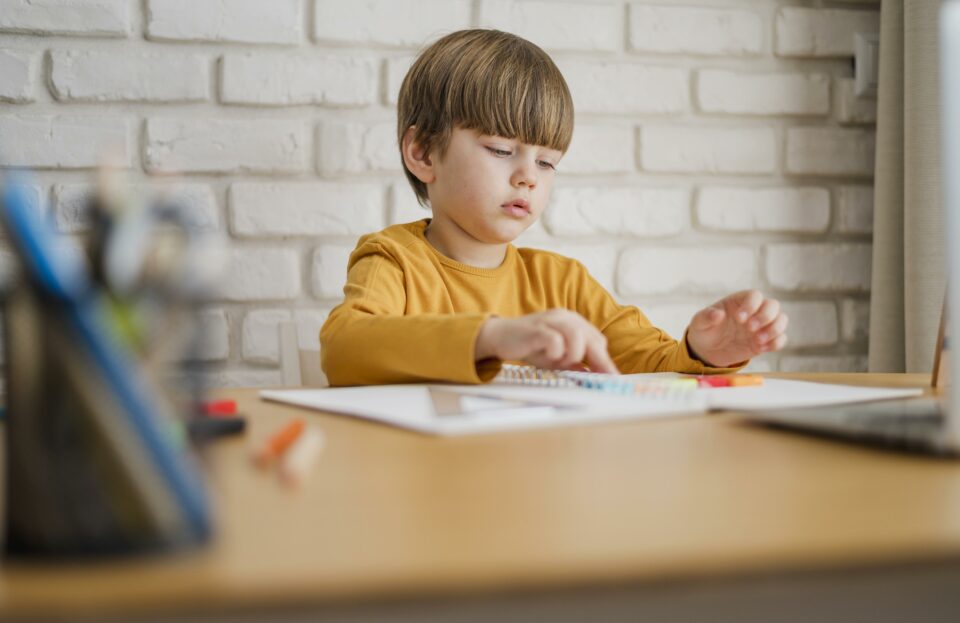
Feeding schedule logs in the hospital with a newborn baby. Lavender baths, followed by story time, and then a kiss before bed. After-school snacks, followed by homework, and then dance or sports practice. Yes, modern parents have read the books and blogs all about the importance and benefits of routines. But guess what? Children also need time for open-ended, unstructured, joyful, pure PLAY. In fact, the lack of unscheduled time for kids to be kids is such a prominent course of discussion that the phenomena has been given its own terminology: “The Play Gap.” And parents are starting to fight back against the overstructured routines!
Causes of the Play Gap
Rachel Hamilton, Director of Education at the Children’s Museum of Denver, notes that, “in recent years, children’s play has been steadily shrinking. Increased academic expectations at younger ages, packed extracurricular schedules, heightened safety concerns, and the rise of personal digital devices have all contributed to a childhood that is more supervised, scheduled, and sedentary than ever before.”
Educational Excellence. Whether it is kindergarten, college, or careers, academic pressures urge kids to always be ready…or to even be ahead of the game. This means hours spent studying, working with tutors, and taking on resume-building opportunities.
Extracurriculars have become “extra”. Even when it comes to modern youth extracurriculars, those, too, have undergone a seemingly generational shift of becoming more competitive. Hours of practices, work-outs, and endless tournaments and competitions don’t take the fun away from extracurriculars, but it definitely adds more pressure to the experiences.
Safety Concerns. Raised on messages of “stranger danger,” many parents were taught that being cautious was synonymous with being responsible. In raising their own children, keeping them busy—and supervised—can feel like the safest option. After all, if they’re occupied, they’re probably not getting into trouble.
Increased Time in a Virtual World. When busy kids have time to decompress, they may choose to sit behind a screen for a bit and just scroll. It requires little effort, thought, planning or energy, but it still gives that little dopamine boost. Instead of riding a bike over to see a friend to hang out, it is much easier for friends to check in virtually.
It must be said: the cause of the play gap is not bad parenting. Hamilton elaborates, “while these pressures often come from a place of love and protection, they can unintentionally crowd out one of the most powerful learning tools children have: self-guided play.”
Effects of the Play Gap
Hamilton explains, “When children’s lives become over-structured—academically, athletically, or socially—we often see the consequences play out in real time.” and that “children may struggle with problem-solving when there’s no right answer, experience heightened anxiety or fear of failure, or have difficulty regulating emotions without adult intervention.” Just like burnt out adults, she notes that, “overworked kids can lose intrinsic motivation, creativity, and joy.”
Always being told where to go and what to do, kids lose the ability to make their own decisions and become more independent. Experiencing boredom and discovering play isn’t taking a break from learning—it is learning.
Play gives children the chance to invent, imagine, solve their own problems, and entertain themselves. Children also get a chance to practice social-emotional skills like negotiating, handling conflict, and so much more. Of course when the fun kicks in, they also experience decreased anxiety and emotional regulation. Where routines help children feel safe, play pushes them to grow!
Fight Back: PLAY!
Check the busy family schedule and make time for some un-structuring. Whether reducing the amount of activities each week, adding a “do nothing” day or reclaiming downtime that turned into screen time, families can make play a priority.
Hamilton reminds that “during child-led play, children practice decision-making, risk assessment, collaboration, and resilience. They test ideas, fail safely, revise plans, and tell stories that help them make sense of their world.” This type of play can be achieved with open-ended toys like blocks, costumes, miniature worlds with figures of people, places and things, cardboard boxes and art supplies, and nature items, too. The only limitation is one’s creativity!
Of course, tweens and teens need to play, too. Based on interests, play could look like: pick-up, no-pressure sports with friends, game nights with friends including escape rooms, drawing, photography, fashion design, cooking or baking, making music, hiking and more. Any activity that gives joy and sparks creativity can fit the bill for play. Encourage new hobbies for enjoyment—not assessment, grades, ranks, or trophies!
And adults, remember to avoid burn-out and spark your own joy, too. Play is NOT just for kids.
The play gap certainly didn’t appear overnight, and it won’t disappear overnight, either. But every unscheduled afternoon and scheduled boredom session is an invitation to imagine and create. Hamilton concludes, “when we protect time for unstructured, kid-led play within a supportive framework and among caring adults we aren’t letting go of learning—we’re trusting children to lead it. And when we do, we see not only capable learners, but curious, confident, and resilient humans.” Clearly when it comes to play, practice makes perfect… so get out there with the family and have some fun!