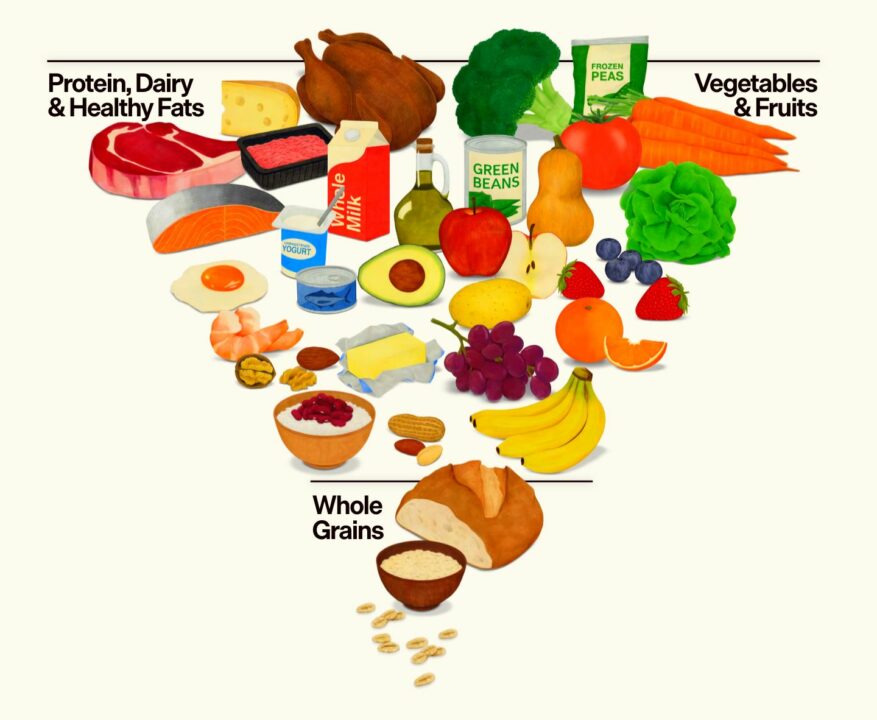
You probably saw the flip of the food pyramid that was announced Jan. 7. It aims to champion protein and healthy fats while minimizing grains – a departure from past governmental guidance. But what does this mean for your family?
This promise to “Make America Healthy Again” comes with the message to eat real food. Secretary Robert F. Kennedy, Jr. says “These Guidelines return us to the basics. American households must prioritize whole, nutrient-dense foods – protein, dairy, vegetables, fruits, healthy fats, and whole grains – and dramatically reduce high processed foods.”
The guidelines are as follows: prioritize protein at every meal; consume full-fat dairy with no added sugars; eat vegetables and fruits throughout the day; incorporate healthy fats from whole foods such as meats, seafood, eggs, nuts, seeds, olive, and avocados; focus on whole grains, while sharply reducing refined carbohydrates; limit highly processed foods, added sugars, and artificial additives; eat the right amount for you, based on age, sex, size, and activity level; choose water and unsweetened beverages to support hydration; limit alcohol consumption.
Still a bit unsure? It’s understandable. Even in the face of these major changes, experts say the basic elements of healthy eating haven’t changed. For instance, you don’t need to get into the scientific weeds to know that vegetables, fruit, and whole grains are good for you, or that getting all of your protein for the day from beef could lead to overdoing it on the saturated fat. Here are some healthy habits to focus on if you’re feeling confused.
Build Your Plate Around a Variety of Plants
Registered dietitian Tracy E. Crane, Ph.D., told Today.com it’s important to “eat the rainbow.”
That means eating a lot of plant foods, including fruit, vegetables, beans, legumes, whole grains, nuts, as well as herbs and spices, Crane says. Like turmeric!
Fiber is also necessary for good health – it positively impacts the gut, heart, weight, and blood sugar levels. If you’re hitting your fiber numbers, you’re also probably meeting other goals on this list, like eating plants and opting for whole foods over processed items (always a win).
Limit Ultra-processed Foods Whenever Possible
Of course, there’s no universally accepted definition of what an “ultra-processed food” really is, but limiting the types of food that are packaged, processed, or prepared is the easiest way to immediately reduce your consumption of sodium and added sugar. We all know a trip to McDonalds every once in a while is inevitable, especially with very influential children in the back, but just be aware of what might be involved in your food. Recent research links ultra-processed foods to a higher risk for cardiovascular disease, chronic diseases, and cancer.
Choose a Variety of High-Quality Protein Sources
Let’s be real, we all wish hitting the protein goals was as easy as eating some of those maybe delicious, maybe not protein bars or shakes. But rather than aiming to get more protein in your day, think about diversifying your protein sources to get more nutritional benefits alongside protein.
“You actually find good amounts of protein in legumes, beans, and whole grains,” says Crane. If you eat animal protein, maybe opt ofr more lean meats to limit the saturated fat. Try adding more fish and plant sources of protein rather than reaching for those easy, processed protein bars and shakes.
Beverages Matter Too
Nutrition isn’t just about what’s on your plate – what you drink also matters.
First, experts recommend staying hydrated by drinking enough water and eating enough hydrating foods. Keep in mind that many beverages, like soda, sweetened coffee drinks, and energy drinks, count as highly processed foods. Shame, I know! I don’t know if I can give up a crisp Diet Coke.
Similarly, keeping alcohol consumption as low as possible is beneficial. There’s no amount of alcohol that is actually proven safe.
Be and Educated Consumer
“The most powerful thing you can do with nutrition is to educate yourself,” says Crane. She recommends learning how to read a nutrition label and being aware of what’s actually in your favorite foods and understanding what regular healthy portion sizes actually look like.
Individual Needs Vary
Lastly, keep in mind that the new national guidance, as always, are just guidelines. They’re meant to influence policy decisions, not necessarily direct you what to put on your individual plate. What are your health goals? Are you trying to lose weight? Lower your blood pressure? Or, like kids, just growing?