When a child in Colorado is diagnosed with cancer, families often find themselves searching for hope. For more than two decades, the Morgan Adams Foundation – born in Denver and fueled by determined parents – has been turning that hope into cutting-edge research that is saving children’s lives.
It all started with a 5-year-old girl named Morgan Adams, who was diagnosed with a brain tumor and passed about 11 months later. At the time, there were just 20 neuro oncologists in the world that could treat pediatric brain tumors. One of them, Dr. Nick Foreman, happened to be at Children’s Hospital Colorado, the same state Morgan was in.
Joan worked with Nick Foreman and asked “What can we do?” He said, “I want to set up a research program,” explains Kat Russell, the Foundation’s Director of Strategic Marketing.
In 2011, they started the first fundraising, raising about $100,000 and enough to start up this science program to start doing research.
The Foundation
To date, the Foundation has funded nearly $12 million in childhood cancer research, with a goal to expand that and their impact. The Foundation has a named lab at the University of Colorado Anschutz, “Morgan Adams Foundation Pediatric Brain Tumor Program,” which is one of the top two pediatric brain tumor labs in the world.
What the Foundation does differently, though, is make sure their data, research, and dialogue are open and shared between programs everywhere. “It works amazingly well when you have doctors that are treating these kids in a clinic and then also run these research programs, because they can transfer all that knowledge together,” says Kat.
She said the research oftentimes will happen almost at a real-time trail. “They’ll look at the tumor’s genetic makeup and see, ‘Ok, we know it’s this type. We know it’s the subtype, but let’s see a little bit more detail as to this particular tumor in order to treat it with a personalized protocol.’”
Joan had the experience of not having to travel across the world to get her child treated, so she really set out to make sure that Colorado, CU Anschutz, and Children’s became a center for excellence for all pediatric cancer care, Kat says.
The Morgan Adams Foundation has amazing stories of kids all over Colorado, not just in Denver. If a child gets cancer in Aspen, or anywhere outside of Denver, Kat says they’re going to go to Children’s to get treated. So the Foundation is the local organization for Colorado in general.
“We just continue to leave our kids behind,” Kat says. Currently, pediatric cancer only receives somewhere less than 8% of the national federal research dollars allocated to all cancer research.
47 kids get diagnosed with cancer everyday, and Kat says the Foundation hears about them all the time.
Asher
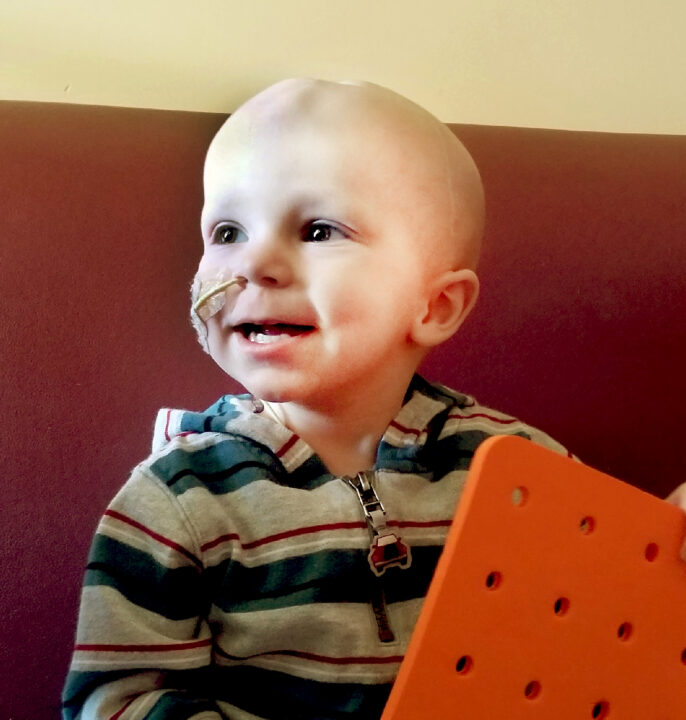
Asher was just over a year old when he was diagnosed with ATRT, an aggressive, fast-growing brain tumor that occurs primarily in very young children.
From the Roaring Fork Valley, Asher was able to stay close to home as he underwent an intense treatment plan informed by emerging research funded by the Foundation. He went through two brain surgeries, chemotherapy, radiation, and a stem cell transplant – all before his second birthday.
“All cancer treatment is awful, but this treatment path improved his survival rates by threefold, and today he is a thriving little 9-year-old boy,” says Kat. Asher recently started fourth grade and loves dogs, robots, and building things.
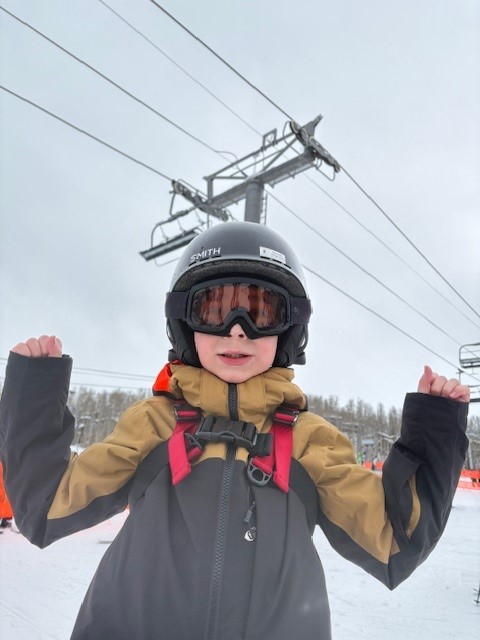
But Kat says even though kids like Asher are able to survive, that survival mark they surpassed is a little misleading. “The treatment paths these kids have to go under, they’re getting treated with chemo and radiation and really, really harsh drugs and surgeries. It’s oftentimes the side effects that are just lifelong that they have to deal with. You’re looking at developmental delays sometimes, or cognitive delays, physical delays, things like that.”
It’s not as easy as saying “You’re cured!” and moving down the path of life. Kids often have to endure relapses later in life as well, or secondary cancers. “We have to do better for our kids, and that’s why we will never stop,” Kat says.
Cancer also doesn’t discriminate, and can happen to any kid at any time. Kat says when it does happen, to remember that the Foundation is a resource that is there to help, funding all pediatric cancer research. Out of the 14 people in the organization, six are parents of a child who has been diagnosed with cancer, and four are bereaved parents.
“It’s any kid, anywhere. You never know. If that does happen to anyone, we are here, and we’re going to fight for those kids,” Kat says.